
-
Solar technology
Commercial solar technology
Solar solutions built to boost energy efficiency, reduce costs and support a cleaner, more resilient future for your business.
View all- Solar Panels

- Battery Storage
- Maintenance & Asset Management
- Solar Panels
- Case studies
- Contact


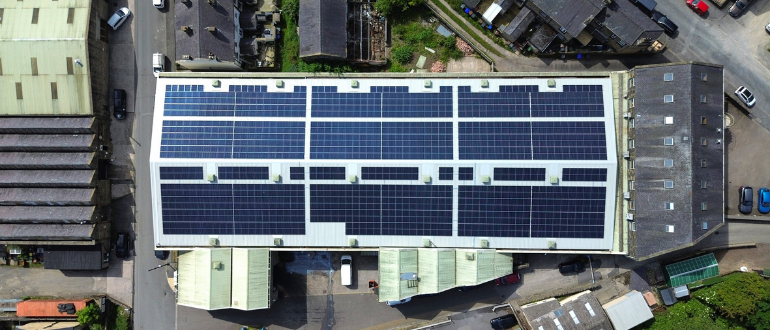
Are solar panels for commercial buildings worth it?
If you’re responsible for managing energy costs in a warehouse, factory, office block or retail unit, you’ve likely asked the question: are solar panels for commercial building worth it?
With energy prices fluctuating, carbon reporting requirements increasing, and pressure mounting to operate more sustainably, many UK businesses are now exploring solar power for commercial buildings as a long-term solution.
In this guide, we break down the financial, operational and environmental case for commercial solar systems, so you can make an informed, evidence-based decision.
In this article:
- Why Businesses Are Considering Solar Power for Commercial Buildings
- Does Solar Reduce Running Costs?
- Understanding the Cost of Commercial Solar Panels
- Cutting Carbon Emissions
- What Happens to Excess Energy?
- Maintenance Costs and System Lifespan
- Risks to Consider
- How Solar Supports Long-Term Business Strategy
Why businesses are considering solar power for commercial buildings
Commercial buildings are often ideal for solar installation. They typically have:
- Large, flat or low-pitch roof space
- High daytime electricity demand
- Long occupancy hours
- Significant and rising energy bills
Unlike residential systems, commercial solar systems are designed to offset large, consistent loads, which makes the financial model very different (and often more attractive).
When a business installs a solar panel system, it generates electricity on-site. This reduces reliance on grid energy and shields the company from volatile wholesale prices.
Does solar reduce running costs?
For most commercial sites, electricity is one of the highest operational expenses. Solar energy directly reduces that cost.
1. Lower energy bills
Every unit of electricity generated by your system is one you don’t need to buy from your supplier. With commercial electricity rates typically higher than historic averages, on-site generation offers immediate savings.
2. Strong return on investment
The typical payback period for commercial solar in the UK ranges from 3 to 6 years, depending on:
- System size
- Daytime energy consumption
- Roof orientation and condition
- Installation costs
- Available government incentives
After payback, the electricity generated is effectively free for the remaining lifespan of the system, often 25+ years. That creates a strong long term financial return.
3. Protection from energy price volatility
Grid electricity prices are influenced by global gas markets, network charges and policy changes. Solar power provides price certainty for a portion of your consumption, which improves forecasting and budgeting.
Understanding the cost of commercial solar panels
The cost of commercial solar panels varies depending on scale and complexity. A larger system generally offers better value per kWp (kilowatt peak), thanks to economies of scale.
Costs typically include:
- Panels and inverters
- Mounting systems
- Electrical works
- Grid connection
- Design and engineering
- Installation
While upfront investment is required, funding options such as asset finance, power purchase agreements (PPAs), and capital allowances can significantly reduce the impact on cash flow.
The Annual Investment Allowance (AIA) may allow businesses to deduct the full cost from taxable profits in the first year, improving ROI.
Cutting carbon emissions
Beyond cost savings, many businesses invest in solar to reduce their carbon footprint.
Generating renewable energy on-site directly lowers Scope 2 carbon emissions (those associated with purchased electricity). For organisations reporting under SECR (Streamlined Energy and Carbon Reporting) or working toward net zero targets, this can be a significant advantage.
Installing solar panels also demonstrates:
- Commitment to sustainability
- Alignment with ESG objectives
- Responsible environmental leadership
For landlords and commercial property owners, buildings with renewable energy systems can also become more attractive to tenants seeking low-carbon premises.
What about excess energy?
If your building generates more electricity than it uses at certain times, that excess energy can be exported back to the grid through schemes like the Smart Export Guarantee (SEG).
However, commercial systems are usually designed to maximise on-site consumption, as this delivers the strongest financial return. The more of your own solar energy you use, the greater your savings.
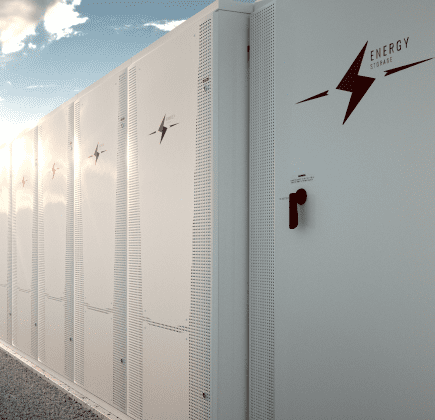
Battery storage can also be integrated to store surplus generation and use it later, further improving system performance.
Maintenance costs and system lifespan
One of the key benefits of solar panels is their reliability.
Commercial solar installations have:
- No moving parts
- Low ongoing maintenance costs
- Long performance warranties (often 25 years for panels)
Routine maintenance typically involves:
- Periodic inspections
- Inverter replacement after 10–15 years
- Cleaning where necessary
Compared to other energy technologies, maintenance costs are minimal, making solar a stable long-term asset.
Risks to consider
While solar power for commercial buildings is attractive, a proper feasibility assessment is essential.
Factors that affect viability include:
- Roof condition and structural integrity
- Shading from nearby buildings or plant
- Grid connection constraints
- Lease arrangements (for tenants)
This is why working with experienced solar panel installers who specialise in commercial projects is critical. A detailed site survey and performance modelling will provide realistic generation forecasts and financial projections.
How solar supports long-term business strategy
Investing in renewable energy isn’t just about today’s electricity bill. It can support wider business goals, including:
Meeting net zero or carbon reduction targets
- Improving ESG ratings
- Enhancing brand reputation
- Future-proofing against regulatory changes
- Increasing property asset value
As corporate sustainability requirements tighten across supply chains, on-site renewable energy can also provide a competitive advantage.
For energy-intensive sectors such as manufacturing, warehousing and logistics, solar can form a core part of a broader decarbonisation strategy.
So, are solar panels for commercial building worth it?
For many UK businesses, the answer is yes, provided the system is properly designed and aligned with operational needs.
Solar is typically worth it when:
- The building has strong daytime electricity demand
- There is sufficient unshaded roof space
- The business plans to remain on-site long term
- Electricity costs are a significant overhead
With falling technology costs, improved system efficiency, and increasing pressure to reduce carbon emissions, commercial solar systems now offer a compelling mix of financial and environmental returns.
Speak to Solar Experts
Every commercial site is different. Roof structure, energy demand, operating hours and future business plans all play a role in determining whether solar power for commercial buildings is the right investment for you.
At Low Carbon Energy, we specialise exclusively in commercial and industrial solar installations. Our team provides honest, data-driven advice tailored to your building and your energy usage, so you can make a confident, informed decision.
If you’re ready to explore how much your business could save, speak to our solar experts today on 01282 421 489 or get in touch to arrange a no-obligation consultation.
Energy Technology

Powering your present. Preserving your future.
Call us on 01282 421 489
Accreditations



strategy be a priority?