-
Solar technology
Commercial solar technology
Solar solutions built to boost energy efficiency, reduce costs and support a cleaner, more resilient future for your business.
View all- Solar Panels

- Battery Storage
- Maintenance & Asset Management
- Solar Panels
- Case studies
- Contact


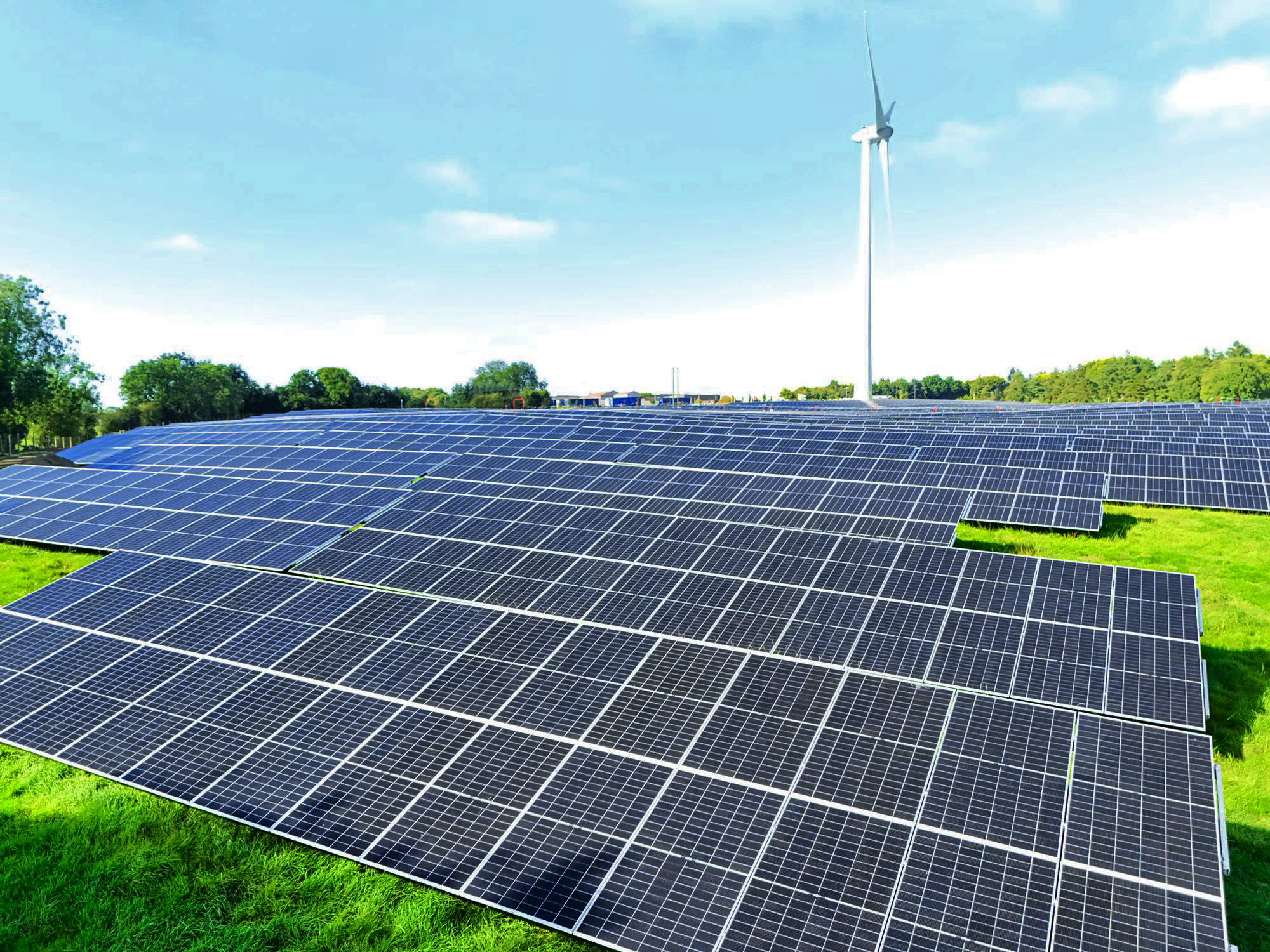
6 Key advantages of solar for businesses (2026)
Energy costs, carbon reporting requirements, and sustainability expectations are changing rapidly across the UK. As a result, more organisations are exploring solar for businesses as a long-term solution for reducing costs and improving energy resilience.
Commercial solar power is no longer a niche technology or a “nice-to-have” sustainability initiative. For many companies, installing solar panels is now a practical investment that delivers measurable financial and environmental returns.
From lowering electricity bills to strengthening corporate social responsibility (CSR), solar can support both operational efficiency and sustainability targets. In this guide, we explore seven key advantages of solar for businesses in 2026 and why adoption continues to accelerate across commercial and industrial sectors.
In this article:
- Lower long-term energy costs
- Reduced dependency on the national grid
- Lower greenhouse gas emissions
- Improved corporate sustainability and CSR
- Energy price protection and long-term stability
- Strong long-term return on investment
Lower long-term energy costs
One of the most compelling reasons businesses invest in solar power is the ability to significantly reduce electricity bills.
A commercial solar system generates electricity on-site, allowing organisations to use clean power instead of purchasing all their energy from the grid. For energy-intensive sites such as warehouses, factories, and office buildings, this can lead to substantial cost savings.
Because solar panels generate electricity during daylight hours, they often align well with business operating times. This means a large portion of the electricity produced can be used directly on-site, reducing the amount of energy purchased from suppliers.
Over time, these savings can become a major operational advantage, particularly as grid electricity prices continue to fluctuate.
Reduced dependency on the national grid
Energy security has become a growing concern for UK businesses. Price volatility and external supply pressures have highlighted the risks of relying entirely on the national grid.
Installing solar panels allows organisations to generate a portion of their own electricity, reducing dependency on the national grid and improving operational resilience.
While solar will not completely replace grid electricity for most commercial sites, it can significantly offset demand during peak daytime periods. This hybrid approach allows businesses to maintain grid access while gaining greater control over their energy supply.
For organisations operating large buildings or industrial facilities, this increased energy independence can be a valuable benefit.
Lower greenhouse gas emissions
For businesses working toward net-zero targets, solar energy is one of the most effective ways to reduce operational emissions.
Grid electricity still carries a carbon footprint because it is partly generated using fossil fuels. By producing renewable electricity on-site, businesses can significantly cut greenhouse gas emissions associated with their energy use.
This is particularly important for organisations measuring their scope 2 emissions, which include emissions linked to purchased electricity.
Switching to solar power allows companies to lower their carbon footprint while demonstrating measurable climate action, something increasingly important for investors, partners and customers.
Improved corporate sustainability and CSR
Sustainability has become a core element of modern business strategy. Customers, investors and employees increasingly expect organisations to operate responsibly and reduce their environmental impact.
Installing solar panels supports corporate social responsibility (CSR) initiatives and demonstrates a clear commitment to renewable energy.
For many businesses, visible renewable energy installations can strengthen brand reputation and reinforce their position as an eco conscious organisation.
Solar projects can also contribute to broader sustainability goals such as:
- Reducing environmental impact
- Supporting ESG reporting
- Demonstrating climate leadership
- Aligning with supply chain sustainability expectations
These benefits can be particularly valuable for organisations bidding for contracts or working with partners who prioritise low-carbon operations.
Energy price protection and long-term stability
Electricity prices have experienced significant volatility in recent years, making long-term budgeting more difficult for businesses. Solar offers a level of energy price stability because once the system is installed, the electricity generated is effectively free.
While businesses will still purchase some grid electricity, solar allows them to lock in a portion of their energy supply at a predictable cost. This stability can make a major difference for organisations with large energy demands, where fluctuating electricity prices can quickly impact operational expenses.
Over the lifetime of a solar system – often 25 years or more – these savings can provide substantial financial value.
Strong long-term return on investment
When evaluating solar for businesses, return on investment (ROI) is often a key consideration.
Commercial solar systems typically deliver value through several combined benefits:
- Reduced electricity bills
- Protection against rising energy costs
- SEG export payments
- Lower carbon emissions
- Improved sustainability credentials
For many commercial and industrial sites, solar installations achieve payback within several years, after which the system continues generating electricity and savings for decades.
Modern solar panels are also highly durable and require relatively little maintenance, making them a reliable long-term infrastructure investment.
Is solar right for your business?
If you’re exploring whether solar could work for your organisation, speaking with experienced commercial solar specialists is the best place to start. The right system design will ensure your solar installation delivers maximum performance, long-term savings, and meaningful carbon reduction.
For expert advice on commercial and industrial solar installations, contact Low Carbon Energy on 01282 421 489 to discuss your project with the team.
Energy Technology

Powering your present. Preserving your future.
Call us on 01282 421 489
Accreditations
strategy be a priority?